
Checking Criminal History in Haskell County
Begin with the event the record should prove. The Haskell County District Clerk holds district felony causes, while the County Clerk is the practical contact for Class A and Class B misdemeanor files. Haskell Municipal Court and the county justice courts keep their own fine-only matters. For a recent arrest, call the Haskell County Sheriff because the county publishes no online jail roster or booking log. Texas DPS supplies statewide conviction and deferred-adjudication data, but its public name search is not a complete fingerprint-confirmed identity history.
Gather a full legal name, date of birth, spelling variants, an approximate event date, and a cause or incident number if one is known. Match dates, court level, and agency before treating a result as the right person. A name alone can point to someone else. Use this sequence:
- Call the correct Haskell County clerk for a cause-number search and ask whether the file is current, archived, or sealed.
- Use re:SearchTX as a statewide supplement, then confirm any Haskell County result with the clerk.
- Call the sheriff for recent custody and request the booking sheet or releasable basic arrest information in writing.
- Check the Texas DPS conviction name search for public statewide outcomes, using all available identity details.
- Order a certified disposition from the court when accuracy, correction, or proof of the final outcome matters.
These steps follow the record from local source to state summary. The official Haskell County homepage shows the courthouse that anchors the county side of that work.
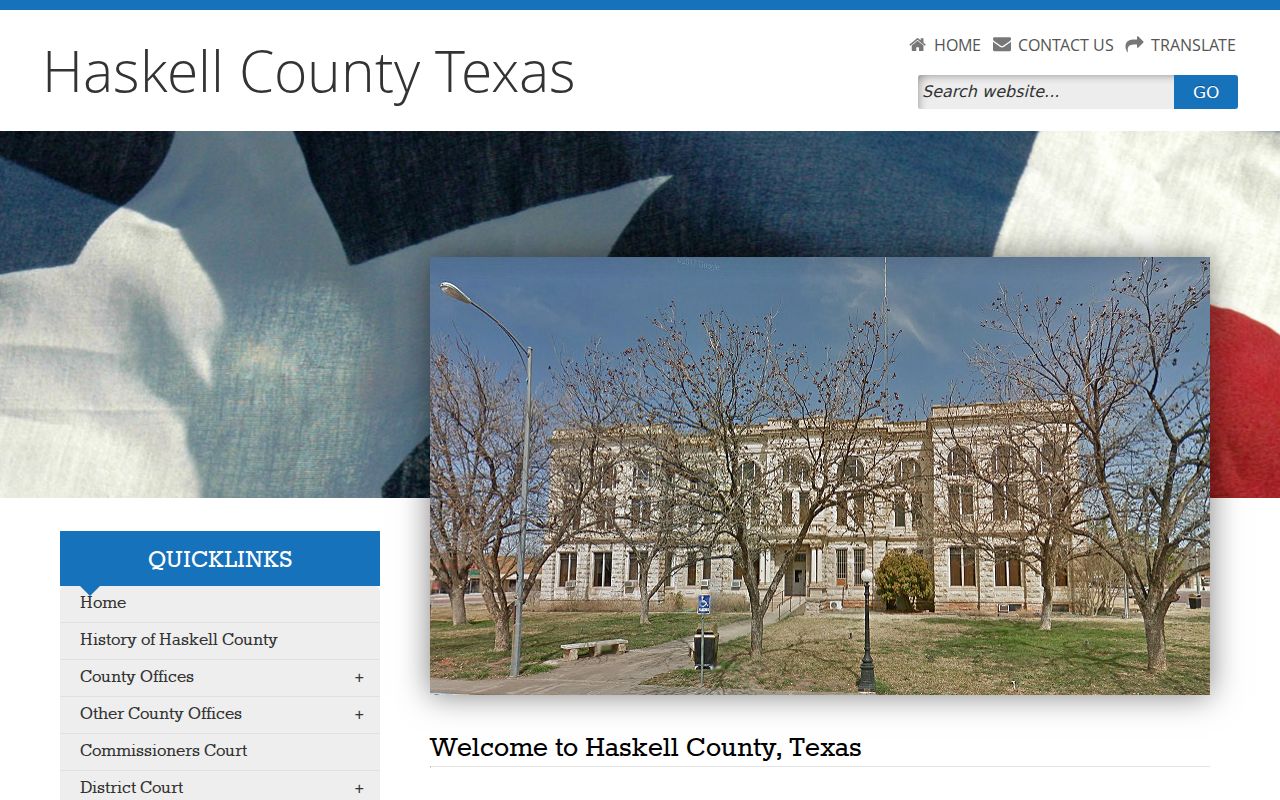
The county image helps identify the official source, but each clerk and the sheriff remain separate custodians inside the Haskell County records system.
Haskell County Courthouse Record Counters
The courthouse at 1 Avenue D in Haskell is the local records hub. District Clerk Cynthia Jones receives district-file inquiries at PO Box 27 and 940-864-2030. The 39th District Court, reached at 940-864-2661, handles felony matters and posts a scheduled-hearings link. County Clerk Cindy Walker keeps the county counter at 1 Avenue D, Suite 4, and can be reached at 940-864-2451. Her posted hours are Monday through Thursday, 8:30 a.m. to 4:30 p.m., and Friday, 8:30 a.m. to 4:00 p.m.
Call before visiting. The county does not publish criminal-copy prices, archive ranges, security rules, or the District Clerk's walk-in hours. Ask whether the file is onsite, whether a plain or certified copy is needed, what identification and payment are accepted, and when a mailed copy can leave. The County Clerk posts a Wednesday and Friday mail-back practice for recordings. That is not a criminal-file rule, but it makes timing worth confirming.
District Clerk
Cynthia Jones
PO Box 27
Haskell, TX 79521
940-864-2030
County Clerk
Cindy Walker
1 Avenue D, Suite 4
Haskell, TX 79521
940-864-2451
County Sheriff
Conrad Saucedo III
Confirm the public counter before travel
940-864-2345
Texas Official Background Checks
The Texas Department of Public Safety Crime Records Division maintains the Computerized Criminal History system. Its public Criminal History Conviction Name Search reports conviction and deferred-adjudication information that Texas law allows DPS to release. A public user registers and spends search credits. Official pages have historically listed three dollars per credit, but the live payment screen did not expose a current price during research. Verify the charge at checkout rather than relying on the older figure.
DPS warns that name matching can return the wrong candidate or miss the right one. First and last name, date of birth, sex, and race may help narrow a search, yet the result is not fingerprint-confirmed. For review of one's own Texas history, follow DPS personal-review instructions and schedule Fingerprint Applicant Services of Texas capture through IdentoGO. A service code controls the purpose and destination. No active Haskell County enrollment site was confirmed, so use the live locator for the nearest current location.
The Texas DPS Crime Records Division describes the repository behind official Texas criminal history.
This state resource explains why a Haskell County court file and a DPS criminal record can show related, but not identical, facts.
| Official product | Identity method | Scope and cost |
|---|---|---|
| DPS public conviction search | Name and descriptors | Public Texas convictions and deferred adjudications; verify live credit price |
| DPS personal review | FAST fingerprints | Subject's Texas CCH; current DPS and vendor fee was not exposed |
| FBI Identity History Summary | Fingerprints | FBI-maintained subject history; $18 plus any optional capture or channeler cost |
| Haskell County court copy | Name or cause number | Local case and disposition; clerk fee is not posted |
FAST Fingerprints Beyond Haskell County
A FAST appointment starts at the official IdentoGO enrollment portal with the service code supplied for the authorized purpose. Do not choose a code by guesswork. DPS personal review has its own instructions, and a different code can send fingerprints to the wrong recipient or support a different statutory process. Since research found no confirmed enrollment center within Haskell County, the live locator should choose the nearest open site on the day an appointment is made.
The FAST and IdentoGO appointment system is the current scheduling channel.
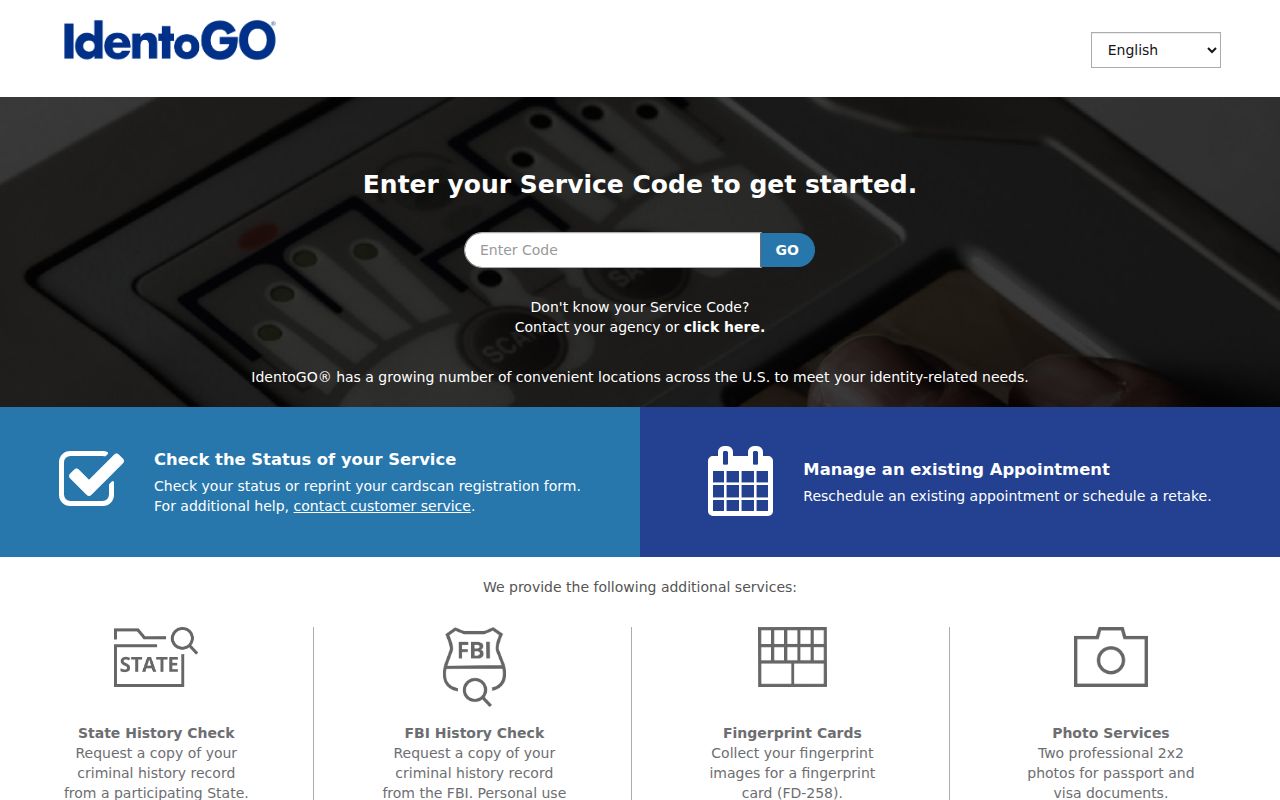
The enrollment screen is only the capture step. DPS, not the vendor site, supplies the resulting Texas record under the service code's rules.
For a national self-review, the FBI Identity History Summary costs $18. The FBI accepts an electronic request followed by approved fingerprint submission, a mailed current fingerprint card, participating USPS capture after an electronic request, or an approved Channeler. The FBI does not expedite the service and will not return a submitted fingerprint card. Texas arrest or disposition errors should also be addressed with DPS and the court or agency that originated the data.
Criminal Record Types
A Haskell County record search becomes clearer once the source document is named. An incident report records the agency narrative. An arrest record states the officer's allegation and legal basis. The jail adds a booking file. Prosecutors later decide what charge to file, and a court clerk creates the cause record. DPS then organizes fingerprint-supported arrest cycles and reported results for qualifying events. Each record answers a different question.
- Arrest and booking records: created by the arresting agency and jail, with custody, bond, and release facts but no proof of guilt.
- Criminal court case files: contain the charge filed, docket, motions, plea, judgment, sentence, and orders kept by the proper clerk.
- DPS criminal history: links identity, qualifying arrest cycles, reported prosecution events, and dispositions under Texas dissemination limits.
- Warrants: originate with an issuing court and are executed by the sheriff or another law-enforcement agency.
- Custody and supervision records: split among the county jail, Haskell County CSCD, TDCJ, parole authorities, and federal systems.
A registry entry is another distinct product. The Texas Public Sex Offender Registry publishes a statutory subset gathered by local registration authorities, not a general criminal-history report. Juvenile and expunged material may be restricted. A missing item in one product does not prove it never existed elsewhere.
The DPS criminal history FAQ sets out the limits of name and fingerprint checks.
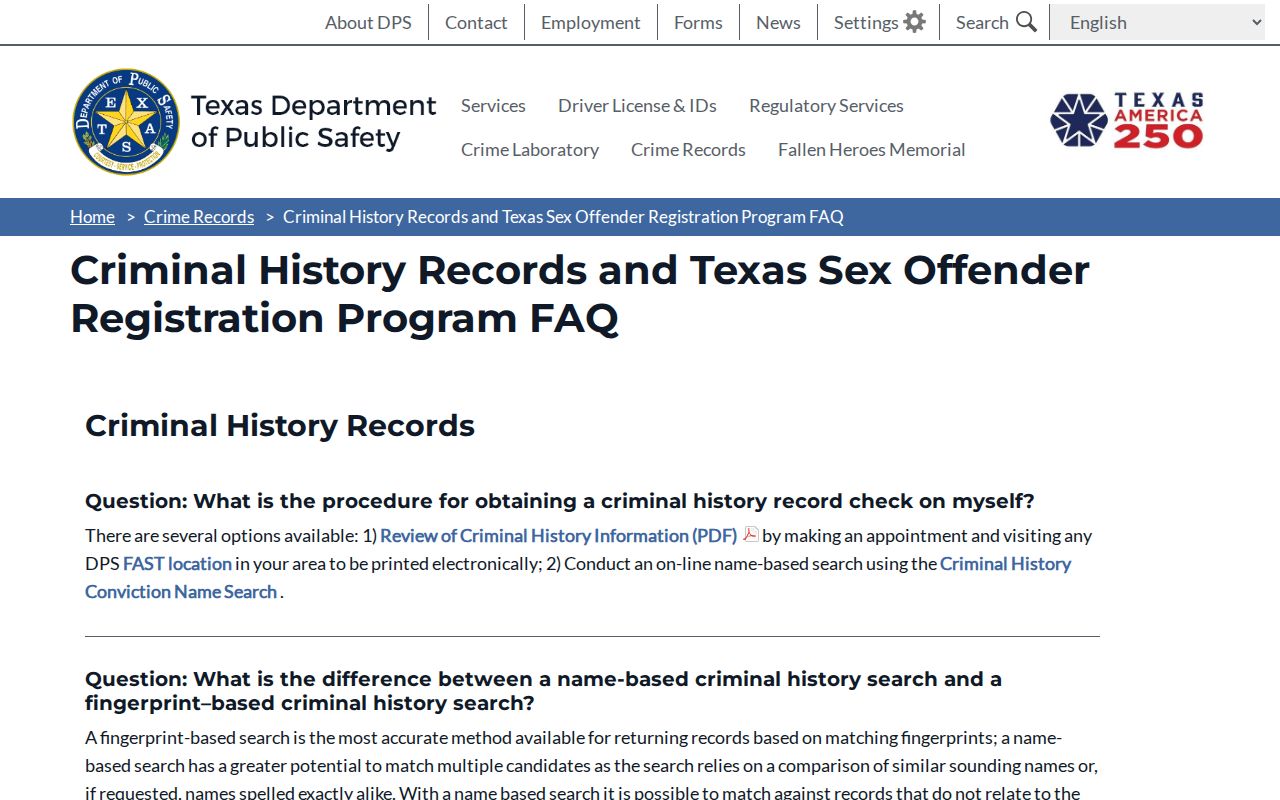
That guidance supports a layered search instead of treating a single public name result as a complete Haskell County record.
Haskell County Jail Records by Phone
The sheriff's official page says the office investigates crime, serves process, executes warrants, and operates the county jail. It does not publish a roster, jail name, current street address, lobby hours, booking log, visitation schedule, mail format, deposit vendor, or release procedure. Call 940-864-2345 with a full legal name and approximate booking date. Ask whether the person entered county custody, which agency booked the person, whether a release or transfer occurred, and which office holds the booking sheet.
A focused written request can seek the book-in and book-out entry, booking sheet, magistrate or bond record, and basic arrest information. The separate incident or arrest report belongs with the agency that wrote it. Inside Haskell city, start with Haskell Police through City Hall. For an event in unincorporated Haskell County, begin with the sheriff. A highway event may belong to Texas DPS.
The official Haskell County Sheriff page provides the current phone and email route. The separate DPS public conviction search supplies the source view shown below for later statewide outcomes.
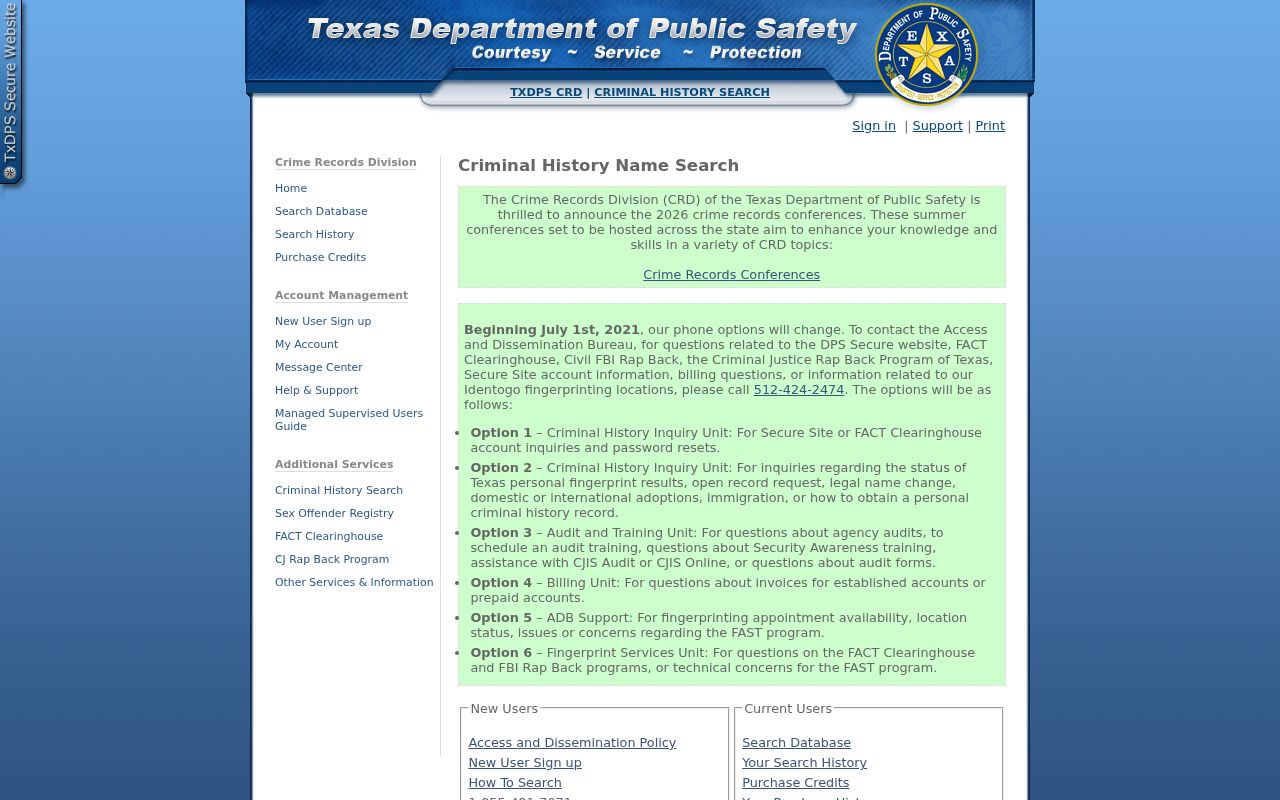
The image points to a state search layer, while recent Haskell County booking facts still require the local phone and written-request path.
Note: Rolling Plains Detention Center is a separate federal immigration facility, not the Haskell County jail or its public booking system.
Inside a Haskell County Criminal Record
A Texas CCH record begins with identity data such as primary and secondary names, aliases, birth information, sex and race descriptors, and state or FBI identifiers. An arrest cycle can add the arrest date, reporting agency, tracking number, alleged charge, statute, and level. Prosecutor and court segments may show the filed charge, cause number, disposition, date, sentence, confinement, or community supervision. Public products suppress restricted facts and may omit outcomes that have not been reported.
The Haskell County court file adds documents that CCH does not reproduce. Those can include a complaint, information, indictment, motions, settings, attorney appearances, bond orders, plea papers, judgment, sentence, court costs, and restitution. A booking record focuses instead on intake, custody, the arrest allegation, bond, and release. Read the source label before drawing conclusions.
| Name and identifiers | Primary or secondary names, aliases, birth data, and agency numbers used to distinguish people. |
|---|---|
| Arrest and booking | Dates, agency, tracking or booking number, allegation, bond, hold, transfer, and release data. |
| Charges and statutes | The arrest allegation and later filed charge, which may differ in wording or degree. |
| Disposition | Conviction, acquittal, dismissal, deferred adjudication, or another reported outcome. |
| Sentence | Confinement, fine, restitution, or community-supervision terms ordered by the court. |
| Custody or supervision | County release, TDCJ confinement, community supervision, parole, or discharge when reported. |
Fixing a Haskell County Disposition
A DPS record can lack a court result because an agency report is late or incomplete. First compare the public DPS entry with the Haskell County cause file. Felony dispositions come from the District Clerk; county misdemeanor outcomes route through the County Clerk. Ask for a certified disposition, not a screenshot or unofficial photocopy. DPS requires a certified record from the court of jurisdiction to correct a missing outcome.
The correction path is narrow. Confirm that the identity and arrest cycle match. Obtain the certified judgment, dismissal, discharge, or other final order. Then follow DPS Error Resolution instructions and send the record in the required form. If the court index itself is wrong, ask the clerk about its correction process first. A corrected disposition does not itself expunge the arrest.
- Disposition
- The outcome of a charge, such as conviction, dismissal, acquittal, or deferred adjudication.
- Deferred adjudication
- Community supervision without an immediate finding of guilt; it is not the same as expunction.
- Certified copy
- A clerk-authenticated court record that can establish the official filed outcome.
- Cause number
- The court's identifier for a filed case, useful when requesting its docket and orders.
Public Access Laws in Texas
The Texas Public Information Act gives access to information held by government unless another law makes it confidential or an exception applies. A Haskell County request should describe an existing record rather than ask an office to research a question. For law-enforcement material, Government Code Section 552.108 can protect specified investigative information, while subsection (c) preserves basic information about an arrested person, an arrest, and a crime.
Court records follow judicial access rules and specific confidentiality laws. Online coverage is not the same as legal access. A file absent from re:SearchTX may still be available through a Haskell County clerk. DPS CCH has a different rule: Government Code Sections 411.083 and 411.135 limit general access while authorizing the public conviction and deferred-adjudication product.
Key Texas laws:
Government Code Sections 552.021 and 552.108 provide general public access and define law-enforcement exceptions, including releasable basic arrest information.
Government Code Sections 411.083 and 411.135 govern CCH confidentiality and the DPS public conviction product.
Texas court access rules preserve access subject to sealing, confidentiality, and required redaction.
Code of Criminal Procedure Chapter 55A sets current Texas expunction eligibility and effects.
Code of Criminal Procedure Chapter 62 governs sex-offender registration, publication, and lawful use.
Haskell County Warrants Need Direct Checks
Haskell County has no verified public warrant portal, most-wanted list, amnesty page, or dedicated warrant line. Call the sheriff at 940-864-2345 about county execution information. Then check the court that may have issued the paper: the District Clerk for district causes, the County Clerk for county misdemeanor causes, Haskell Municipal Court for city fine-only matters, or the proper justice court. State law-enforcement networks are not public statewide warrant searches.
An arrest warrant stems from a complaint and probable cause. A bench warrant or capias follows a court event. A capias pro fine concerns enforcement after a fine-only judgment. Search warrants and sealed warrants are not public lookup products before execution. Status can also lag after service or recall, so no online result should be treated as proof that no Haskell County warrant exists.
Ask the issuing court for the linked cause, current status, bond if set, accepted resolution method, and expected clearance time. Anyone who believes a warrant is active should seek legal advice before appearing. Do not send funds because of an unsolicited warrant call.
Sealed, Expunged, and Restricted Records
Texas expunction and nondisclosure are separate remedies. Chapter 55A expunction can cover defined arrests and outcomes, including some acquittals, pardons, dismissals, no-bills, identity-theft cases, and authorized program completions. Its effect can require removal from ordinary maintenance, release, or use. A conviction does not qualify merely because time passed. Texas reorganized the expunction law on January 1, 2025, so current Haskell County filings must use Chapter 55A.
An order of nondisclosure more often addresses qualifying deferred adjudication and certain convictions. It restricts public dissemination but allows access by listed criminal-justice and authorized agencies. Nondisclosed information is excepted from TPIA disclosure. Juvenile material, victim and minor identities, Social Security numbers, driver-license data, financial identifiers, and parts of active investigations can be restricted for other reasons.
Start with the complete certified disposition. List each arresting, booking, prosecuting, court, repository, and data agency that may hold the event. Confirm eligibility, filing court, and current fee with the Haskell County clerk because the county does not post a complete petition packet or district filing price. After a signed order is processed, review the DPS personal history and local indexes. A certified order is the key correction document if a cleared event still appears.
TDCJ Records After Haskell County Custody
The Texas Department of Criminal Justice layer begins after state commitment or when parole or mandatory-supervision status matters. The Integrated Victim Services System Offender Search accepts a name, SID, or current TDCJ number and supports a wildcard at the start or end. A separate action searches prior TDCJ numbers. Public searching does not require a notification account, although change notifications do.
The DPS criminal-history reporting page shows how local police, prosecutors, courts, and supervision agencies send later events to the state repository.
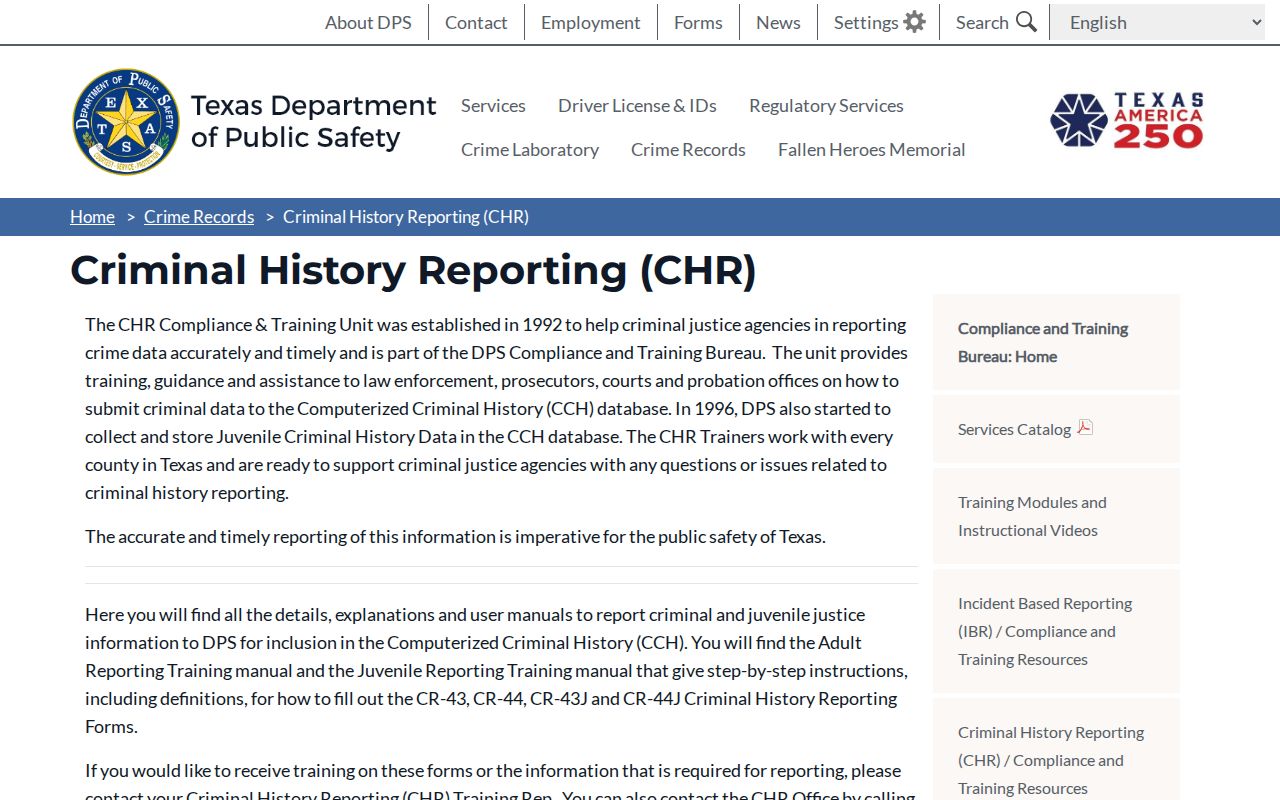
The reporting view explains why a booking event may appear before its Haskell County disposition reaches the state record.
TDCJ also accepts no-charge email inquiries at pia@tdcj.texas.gov and operates general inmate-location lines at 936-295-6371 and 800-535-0283. A precise identifier speeds the request. Use the TDCJ IVSS offender search for state custody, not for county pretrial detention. Federal Bureau of Prisons and immigration locators cover separate systems.
Haskell County Criminal Records by City
Haskell, Rule, and Rochester are the county's three incorporated cities in Census order. Local agency identity matters because no city offers a verified all-record portal. Haskell operates a police department and municipal court. Rule and Rochester require city-first contact to learn whether a city officer, the Haskell County Sheriff, or another agency created the record. County felony and misdemeanor files still route to the Haskell courthouse clerks.
Haskell Criminal Records
2020 population 3,089. City Hall routes police reports, and the municipal court keeps ordinance and fine-only cases.
Rule Criminal Records
2020 population 636. City government must identify the report custodian or issuing court because no verified portal exists.
Rochester Criminal Records
2020 population 248. Start with the city to identify the agency, then use county clerks or sheriff as needed.