
Haskell County Criminal Court Cases
Haskell County criminal cases sit in separate record silos. The 39th Judicial District Court hears felony matters. District Clerk Cynthia Jones keeps those district cause files and can be reached at 940-864-2030. The constitutional County Court handles Class A and Class B misdemeanor jurisdiction provided by Texas law, with County Clerk Cindy Walker serving as the practical file contact at 940-864-2451. Justice courts and Haskell Municipal Court keep their own fine-only dockets. A name search at one office cannot rule out a file held by another.
The court file begins after a complaint, information, or indictment places a charge before a court. It may then collect settings, attorney appearances, motions, bond orders, plea papers, judgment, sentence, costs, and later supervision events. That is why a Haskell County court file is the right source for the filed charge and outcome. An arrest report or booking entry captures an earlier stage and may show an allegation that prosecutors later rejected or changed.
Haskell Felony Case Records
The District Clerk is the first local channel for a felony cause. Give the legal name, likely filing year, and cause number if known. Ask whether the file is electronic or archived, whether a docket sheet is available, and what plain-copy or certification charges apply. The official page does not publish copy prices, archive ranges, or walk-in hours, so a call before travel prevents a missed trip. The clerk's mailing address is PO Box 27, Haskell, TX 79521.
The Haskell County District Clerk page shows the official contact channel and a web inquiry form.
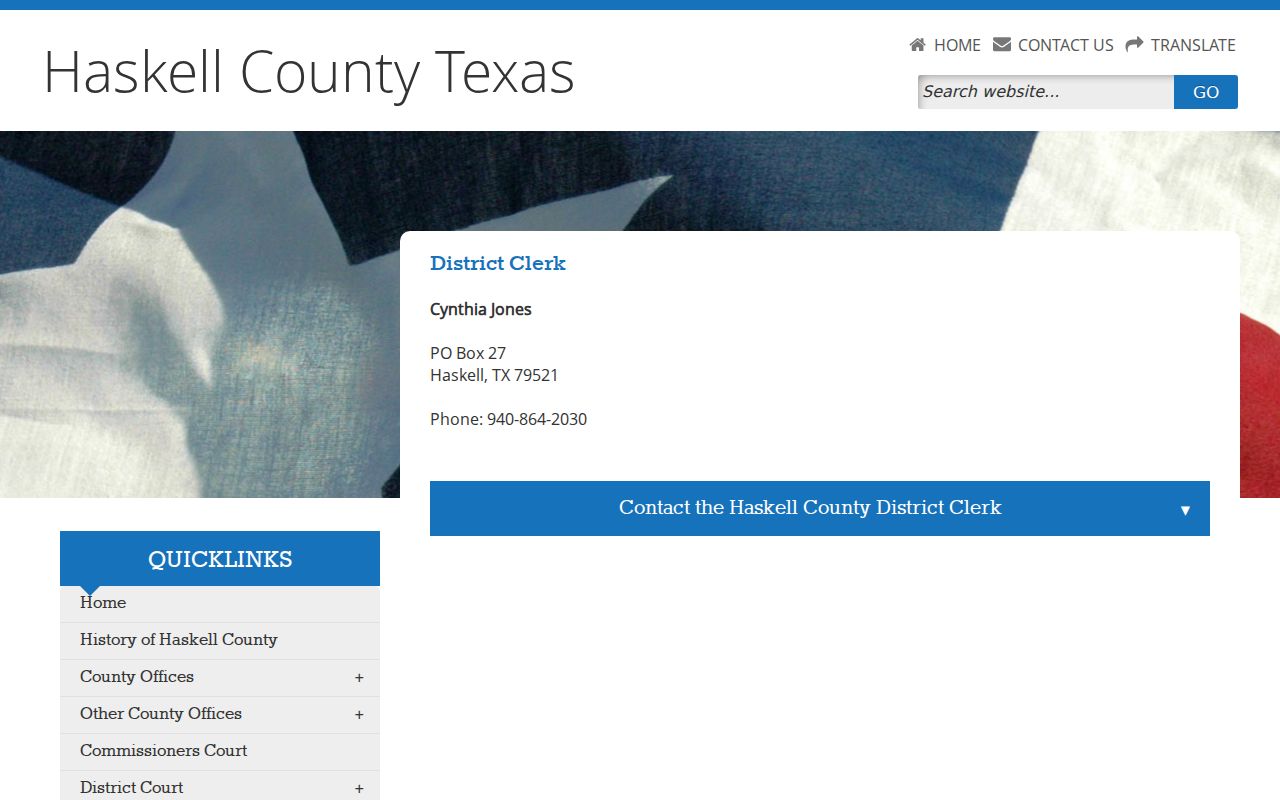
The form asks for a name, phone number, email and confirmation, a reason for inquiry, and reCAPTCHA. It starts an inquiry; it is not a searchable criminal docket or a promise that records will be emailed.
Searching Haskell County Case Records
Use local clerk contact and re:SearchTX together. Statewide electronic coverage depends on clerk participation, document security, and the age of local digitization. A blank search result does not prove that Haskell County has no case. The direct clerk route remains vital for older, non-electronic, sealed, or locally indexed material.
- Identify the likely court from the offense level. Call the District Clerk for a felony, the County Clerk for a Class A or B misdemeanor, and the municipal or justice clerk for a fine-only matter.
- Ask the clerk to search the party name and filing year. Supply the cause number when known and confirm that the result belongs to the correct person.
- Sign in to re:SearchTX, choose Cases, Filings, Text in Documents, or Hearings, then enter a focused keyword.
- Use the left-side filters and open Case Details, Filing Details, or the hearing dialog. Treat the hearing calendar as schedule context, not final disposition proof.
- Request the docket, charging instrument, judgment, sentence, dismissal, or discharge order from the custodian. Ask for a certified copy when identity or DPS reporting must be resolved.
| Field label | Type | Required | Use |
|---|---|---|---|
| Global Search | Text | Yes | Searches keywords across the chosen result area. |
| Cases, Filings, Text, Hearings | Tabs | No | Changes the kind of result being searched. |
| Left-side filters | Facets | No | Narrows results based on the selected tab. |
| Export and Save Search | Actions | No | Preserves results or a query for later review. |
| Details and hearing dialog | Links | No | Opens available case, filing, or setting information. |
The state court search interface illustrates the electronic route available to Haskell County researchers.
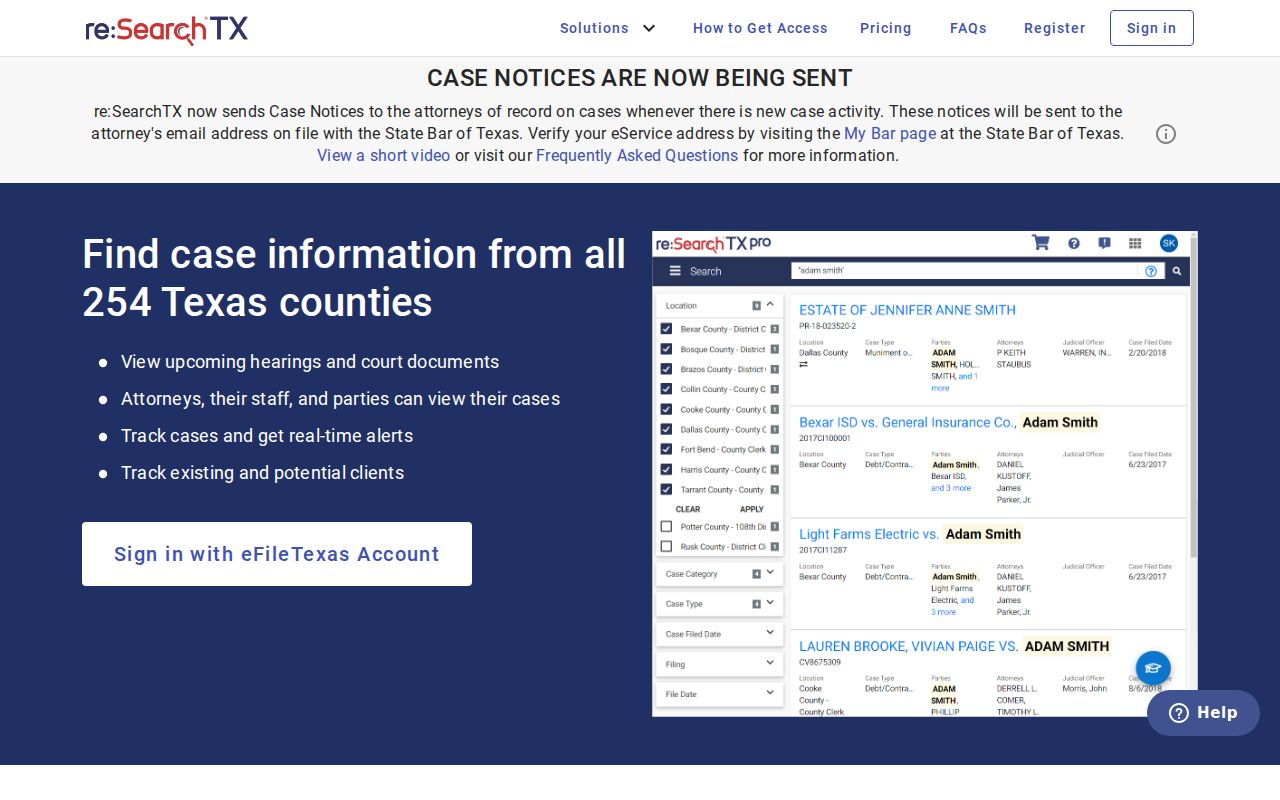
Its search tools can narrow a lead, but the Haskell clerk remains the source for local file status, unavailable documents, and certified copies.
Haskell Court and Clerk Roles
Choosing the right Haskell County clerk is often the hardest part. The District Clerk serves the district felony court. The County Clerk, at 1 Avenue D, Suite 4, Haskell, Texas 79521, handles the county misdemeanor file route. Its public counter hours are Monday through Thursday from 8:30 a.m. to 4:30 p.m. and Friday from 8:30 a.m. to 4:00 p.m. Haskell Municipal Court covers city ordinance violations and state offenses punishable by fine only that arise within the city. Justice courts also handle fine-only cases and magisterial work.
The Haskell County Clerk page supplies the misdemeanor counter address, phone, email, hours, and public-request link.
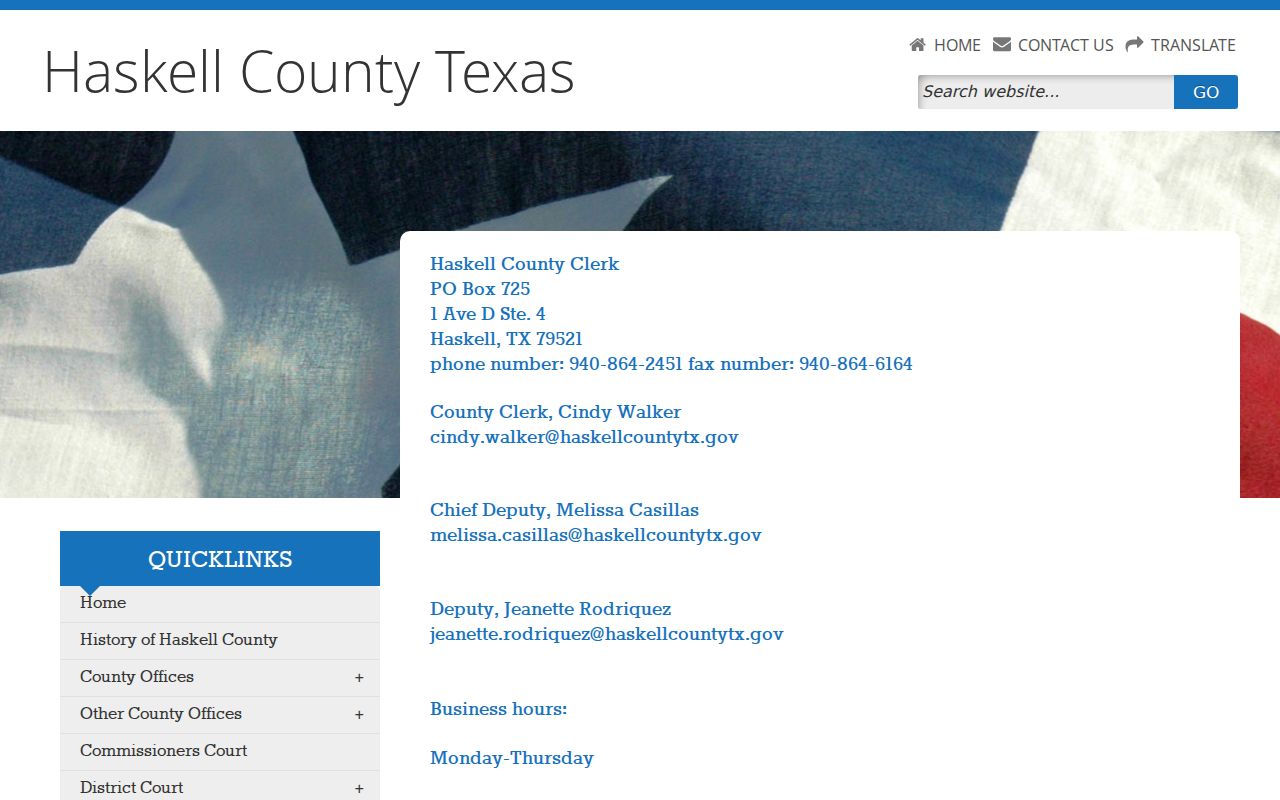
The clerk lists no specific criminal copy fee online. Requesters should ask for the price, accepted payment, retrieval time, and certification charge before ordering.
Note: A municipal or justice-court case may never appear in the district or county clerk's criminal index.
Inside a Haskell County Case File
A Haskell County case file records the formal prosecution. The cause number links the docket and documents to one court. The charging instrument shows what the State actually filed. Docket entries trace procedural events, while the judgment and sentence state the result. Reading only a charge line can hide a later dismissal, amendment, plea, acquittal, or deferred-adjudication order.
| Cause number and court | Identifies the court file and separates it from similar names or unrelated arrests. |
|---|---|
| Charging document | The complaint, information, or indictment states the filed allegation and offense level. |
| Docket entries | A dated list of filings, settings, appearances, orders, and other case activity. |
| Hearing information | Shows scheduled event dates and types, though a calendar is not proof that an event occurred. |
| Disposition and judgment | Records dismissal, acquittal, conviction, deferred adjudication, or another resolved status. |
| Sentence and conditions | May state confinement, community supervision, costs, restitution, or other court-ordered terms. |
Attorney appearances, bond documents, financial ledgers, and attached filings may also appear. Public views can omit sealed documents and protected personal information.
Haskell Certified Court Dispositions
A certified disposition is the best Haskell County court record when a DPS criminal-history entry lacks an outcome or shows the wrong one. First obtain the complete disposition from the court of jurisdiction. The District Clerk supplies district records, while the County Clerk supplies the county misdemeanor route. Ask for the judgment, dismissal, acquittal, discharge, or other final order and confirm that the clerk's certification covers the copy.
DPS requires a certified disposition from the court that handled the cause to correct a missing outcome. A screenshot, an unofficial index, or an arrest sheet is not a substitute. Compare the name, cause number, charge, and disposition date before sending the record through DPS Error Resolution. Deferred adjudication means supervision without an immediate adjudication of guilt; it is not the same result as dismissal after trial, acquittal, or expunction.
How a Criminal Case Moves
A Haskell County case may start with arrest or summons, followed by magistrate warnings, probable-cause review, and bond. A prosecutor then reviews the facts. A misdemeanor information or felony grand-jury indictment sets the formal charge. Arraignment follows, then discovery, motions, and plea talks or trial. Judgment, sentencing, appeal, and later supervision events complete the court trail. The exact path varies, and a charge may change before indictment or judgment.
Case flow: Charges Filed › Arraignment › Pretrial › Plea or Trial › Disposition › Sentencing
The 39th District Court page links to scheduled hearings and identifies the trial court contact.
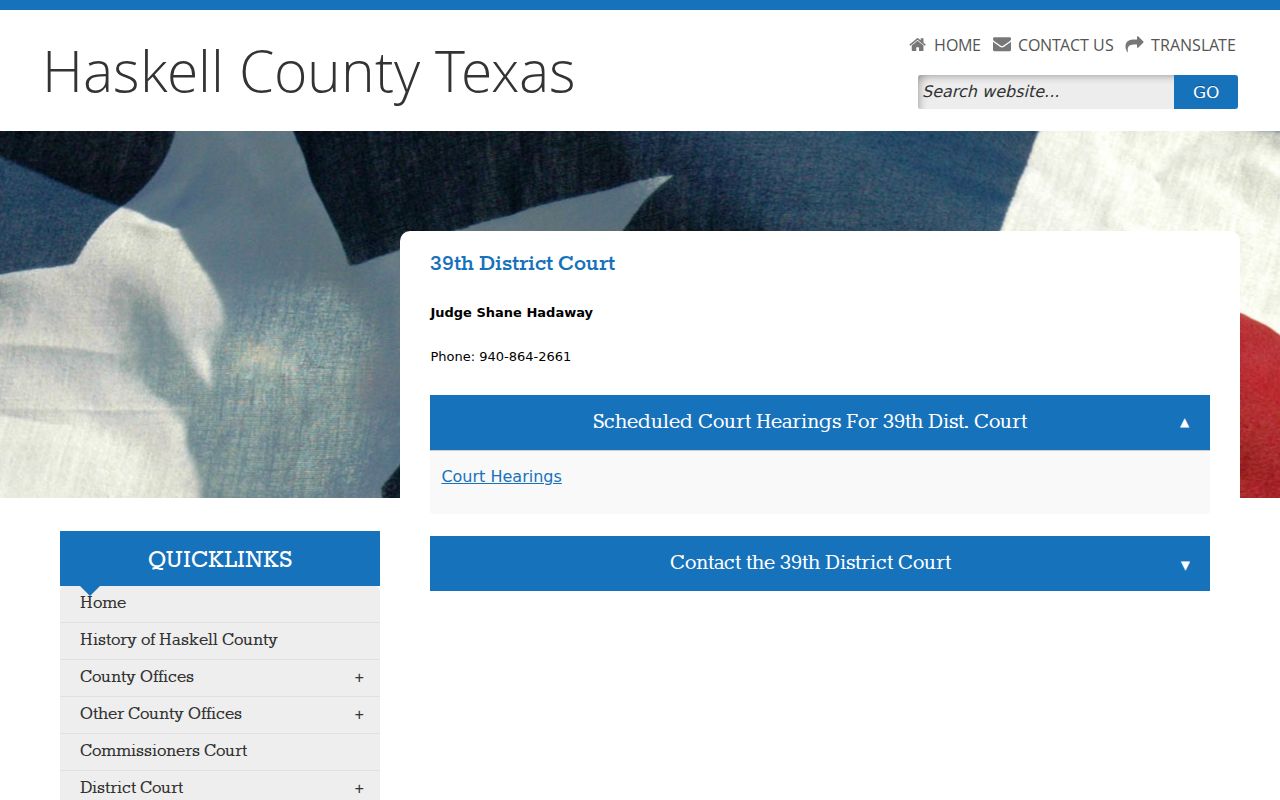
A listed hearing is only a scheduled event. Confirm the docket entry and final order with the District Clerk before treating it as an outcome.
Federal Cases Beyond Haskell Courts
Federal charges are outside the Haskell County clerks' files. Haskell County lies in the Northern District of Texas, and PACER is the official nationwide federal docket service. Registration is required. Users are billed under the judiciary's current fee schedule, with charges waived for a quarter when the total does not exceed the current threshold. Sealed filings and protected information remain unavailable.
The PACER service page marks the separate search path for a federal criminal docket.
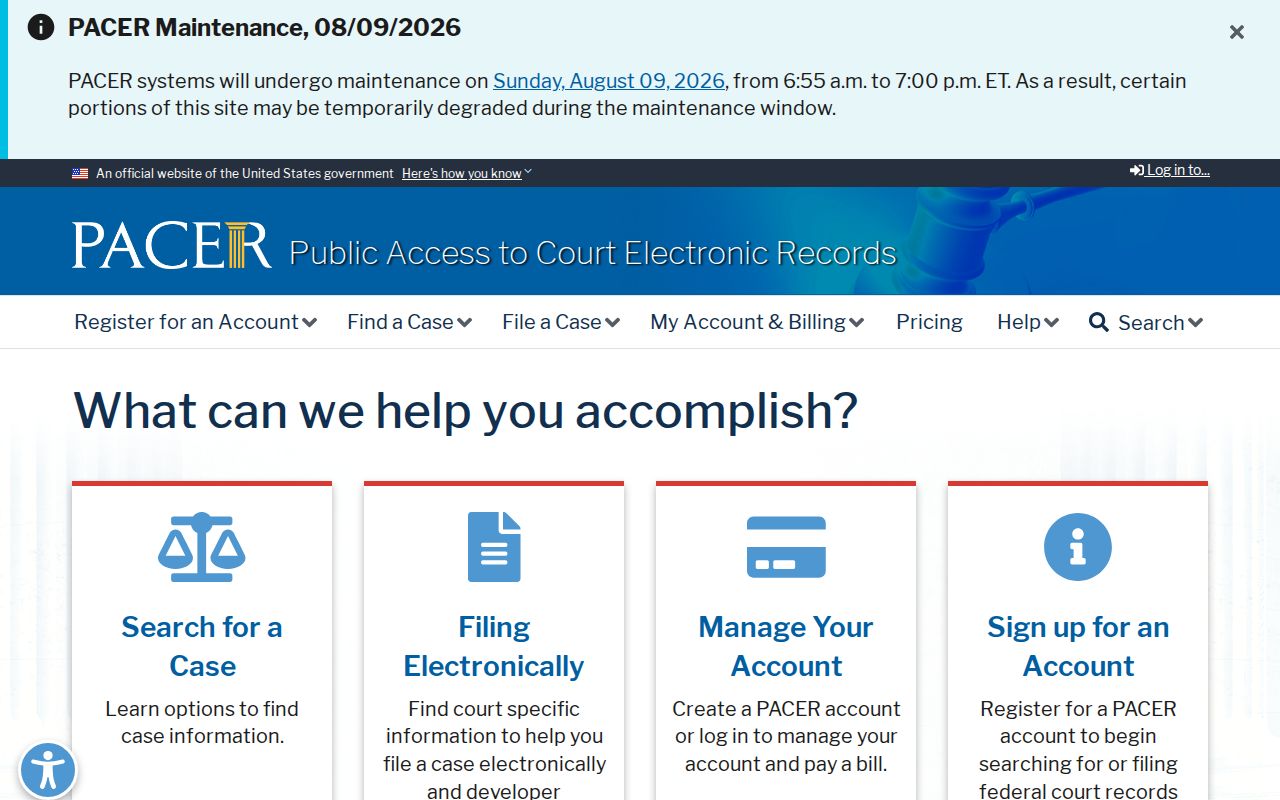
PACER does not turn a federal filing into a Haskell County court record. The federal court and county courthouse remain distinct custodians.
Haskell Criminal Case Terms
Court terms carry precise meanings. A quick glossary helps distinguish a filed event from a final outcome in a Haskell County docket.
- Disposition
- The outcome of a charge, such as conviction, dismissal, acquittal, or deferred adjudication.
- Indictment
- A grand jury's true bill that formally accuses an indictable offense.
- Information
- A prosecutor-signed charging instrument commonly used for a misdemeanor case.
- Docket
- The chronological court record of filings, settings, and events.
- Capias
- A court order directing arrest, often after a charging or procedural event.
A dismissal ends the charge but does not automatically erase the arrest record. Deferred adjudication can end in dismissal after successful supervision, yet it does not equal expunction.
Case Record Access & Restrictions
Texas court records are generally accessible under the judicial public-access framework, subject to sealing, statutory confidentiality, and redaction. Electronic coverage is not the same as legal access. A document missing from re:SearchTX may still exist at a Haskell County clerk's office. Ask whether the cause is locally indexed, archived, sealed, or withheld from remote display.
The Texas Public Information Act governs agency records, while court records follow judicial access rules. Juvenile information, protected victim or minor details, Social Security numbers, financial identifiers, and other confidential fields can be removed. Active law-enforcement records may also receive protection, but the court's filed public papers remain a separate inquiry.
Access point: Contact the clerk that holds the cause when a Haskell County case is absent online. Request existing documents by name and ask what certification or redaction applies.
For arrest-stage facts before a cause is filed, use the official Haskell County arrest lookup channels. Once charges reach court, the clerk's docket and certified orders are the stronger proof of what happened.